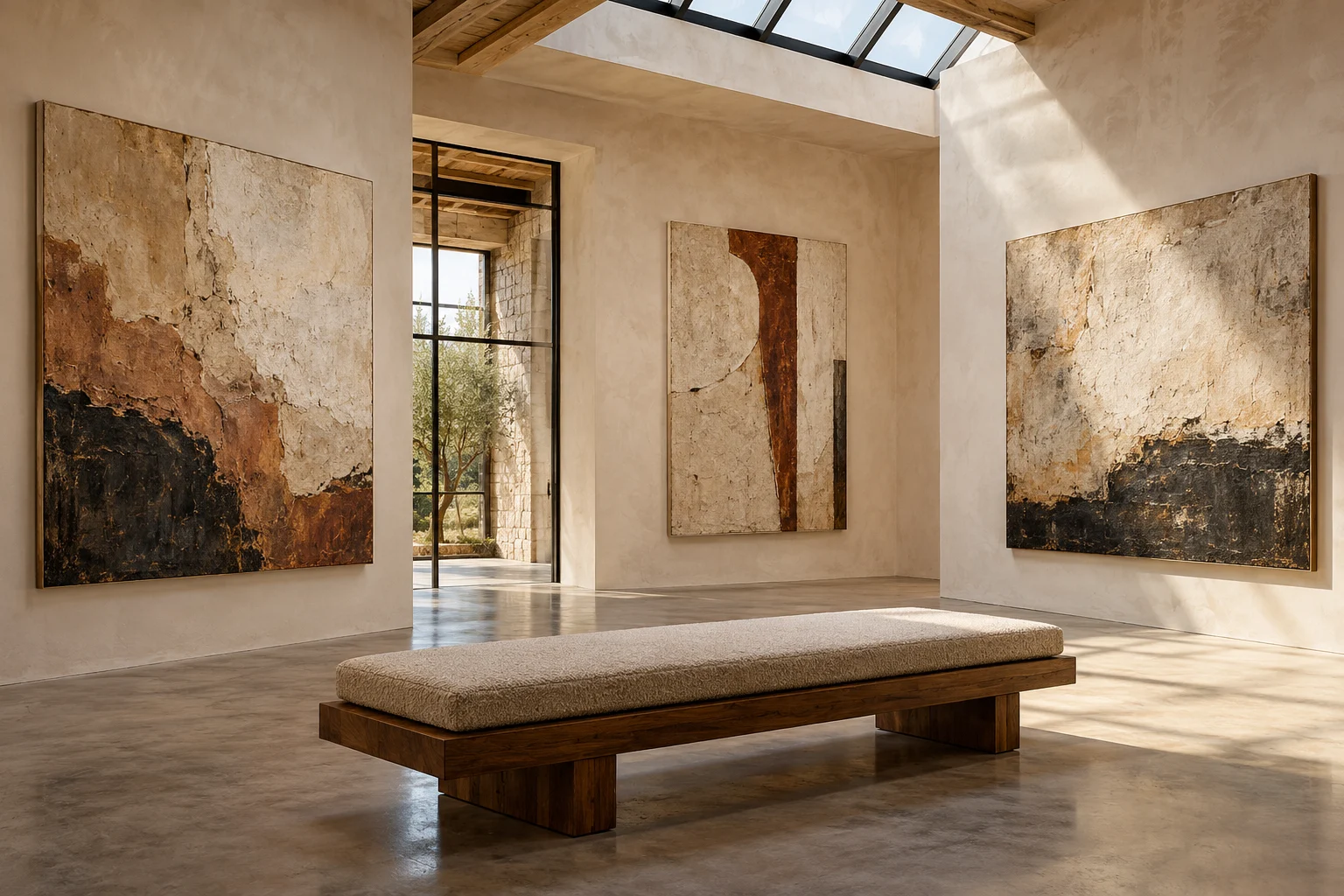
A heavy, textured canvas hangs on a gallery wall, its surface a chaotic landscape of deep ochre and jagged, midnight-blue strokes. You find yourself standing before it for several minutes, drawn to the way the light catches a particular ridge of dried paint. Your immediate reaction is one of tension; the colors feel restless, almost vibrating against the neutral white of the gallery wall. You feel a pull toward the piece, yet you lack the vocabulary to explain why it commands your attention.
The Gap Between Sight and Statement
It is common to walk into a local exhibition and feel a disconnect between your visceral response and the written placards. Often, a small card beside the work offers a curated explanation: the artist might speak of the intersection of memory and urban decay or the rhythm of subconscious movement. While these descriptions provide a framework, they can sometimes feel like they are correcting your initial impression. You might see a storm; the artist says they saw a dream. This tension creates a choice: do you attempt to align your vision with the provided text, or do you honor your own sensory experience?
Navigating Personal Preference
For many, the challenge arises when a strong visual preference meets an unclear practical need. You may find a piece that resonates deeply with your aesthetic sense, yet you struggle to determine how it fits into your life or how to discuss it with others. For example, if you are considering a significant purchase for your home, you might find a sculpture that feels perfect in the gallery's high-ceilinged light, but you remain unsure if its presence will feel harmonious in your specific living space. The tradeoff involves weighing the immediate emotional impact of the object against its long-term integration into your daily environment.
Refining the Observation
When you encounter this hesitation, the most productive path is to move from vague feeling to concrete observation. Instead of searching for the "correct" way to interpret a movement or a color palette, focus on the physical properties that triggered your interest. Is it the weight of the material? The direction of the lines? The way the shadows fall across the surface? By identifying these specific elements, you build a foundation for your own perspective that exists independently of the artist's intent.
If you find yourself seriously considering an acquisition, you might ask the gallery representative how the piece has responded to different lighting conditions or what the physical dimensions imply about its placement. If the piece is part of a larger installation, ask how the surrounding elements are intended to interact with the viewer's movement. Ultimately, the goal is not to master art history, but to decide which visual truths you are willing to live with.